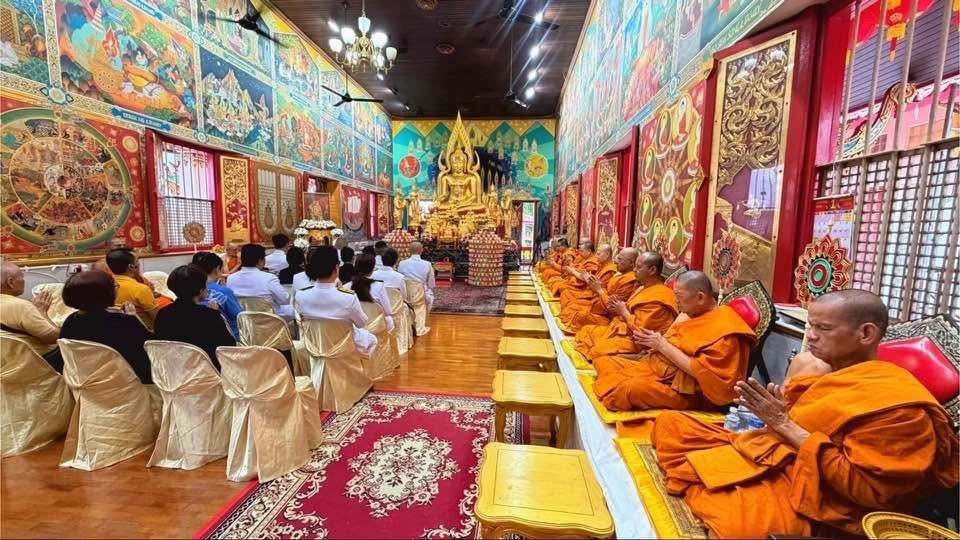
Traditional Buddhist hall at Buddhaguna Buddhist Temple
Dhamma

Teachings for everyday life

Explore Dhamma teachings, reflections, chanting, audio, video and Buddhist resources connected to Buddhaguna Buddhist Temple.

A path of understanding and practice

Begin with the essentials. Go deeper when you are ready.

The Dhamma is not simply something to read. It is a way of understanding experience and cultivating wisdom, ethical conduct and a steadier mind. This library is arranged as a calm learning journey rather than a catalogue of information.

Bodhi-inspired illustration representing mindfulness and insight
New to Buddhism?

Start here

Five foundations provide a simple route into Buddhist teaching and practice.

01

Understanding the Buddha’s Teaching

Begin with the purpose of Dhamma: seeing clearly and reducing suffering.

02

Four Noble Truths

Understand suffering, its causes, its ending and the path of practice.

03

Noble Eightfold Path

Develop wisdom, ethical conduct and mental cultivation together.

04

Living the Five Precepts

Use ethical restraint as a practical foundation for everyday life.

05

Beginning Meditation

Train attention gently and learn to observe body and mind.

Foundations of Dhamma

Core teachings

The central teachings are given room to breathe. Each is presented as something to understand, contemplate and apply.

Four-petal lotus diagram representing the Four Noble Truths

The Four Noble Truths

The Buddha’s teaching begins by looking directly at dukkha—the unsatisfactory and stressful nature of conditioned experience. It then examines craving as a cause, the possibility of cessation, and the path that leads toward freedom.

DukkhaOriginCessationPath
Eight-spoked Dhamma wheel representing the Noble Eightfold Path

The Noble Eightfold Path

A balanced training in right view, intention, speech, action, livelihood, effort, mindfulness and concentration. The eight factors support one another and are traditionally grouped as wisdom, ethical conduct and mental cultivation.

WisdomEthical ConductMental Cultivation
Five-petal lotus representing the Five Precepts

The Five Precepts

The Five Precepts are voluntary training principles: refraining from killing, taking what is not given, sexual misconduct, false speech and intoxicants that lead to heedlessness. They provide a practical ethical foundation for lay Buddhist life.

CompassionHonestyResponsibilityMindfulness
Practice & Insight

Explore by theme

Related teachings are grouped together. Open only the subject you want to explore.

Cultivating a wholesome life

Practices that shape generosity, conduct and the heart.

Dāna — Generosity

Giving loosens attachment and cultivates openness. Dāna can include material support, time, service, knowledge and acts of care.

Sīla — Ethical Conduct

Ethical conduct protects ourselves and others from harm and creates a stable foundation for meditation and wisdom.

Mettā — Loving-kindness

Mettā is the deliberate cultivation of goodwill: wishing for oneself and others to be safe, peaceful and free from hostility.

Training the mind

Practices for steadiness, awareness and careful observation.

Bhāvanā — Mental Cultivation

Bhāvanā means developing or cultivating the mind through practices that strengthen wholesome qualities and understanding.

Mindfulness & Meditation

Mindfulness remembers to stay attentive to present experience. Meditation provides a disciplined setting for developing stability and insight.

Buddhist Practice in Everyday Life

Practice continues beyond formal meditation through speech, choices, relationships, work, generosity and awareness of intention.

Seeing experience clearly

Teachings that deepen insight into conditioned life.

Anicca — Impermanence

Conditioned things arise, change and pass away. Seeing impermanence clearly helps loosen the demand that changing experience remain fixed.

Dukkha — Unsatisfactoriness

Dukkha includes obvious pain as well as the instability and stress that arise when we cling to what cannot provide lasting security.

Anattā — Not-self

Anattā points to the absence of a permanent, independent self within changing physical and mental processes.

Kamma & Merit-making

In Buddhist teaching, intentional action has consequences. Wholesome actions of generosity, virtue and cultivation are associated with merit and support beneficial conditions.

Dhamma for Daily Life

Ancient wisdom for ordinary moments.

A quieter place to explore how Buddhist principles can inform the situations we meet every day.

Radiating circle illustration representing Dhamma in daily life
When the mind is restless

Notice restlessness without immediately fighting it. Return attention to a simple anchor such as the breath or bodily sensation, and observe how the state changes.

Responding to anger

Pause before acting on anger. Recognise the feeling, consider its causes and consequences, and make room for a response guided by non-harming.

Practising loving-kindness

Begin with a sincere wish for well-being and gradually extend that goodwill beyond those who are easy to like.

Understanding change

Remembering impermanence can soften resistance when circumstances, relationships and emotions do not remain as we wish.

Generosity as practice

Giving is not measured only by money. Attention, patience, service and sharing can all become opportunities to weaken self-centred attachment.

Chief Abbot Dhamma Archive
Buddhaguna Dhamma Archive

Teachings & Messages from Venerable Seck Kong Hian

Documented public addresses and messages from Buddhaguna Buddhist Temple’s Chief Abbot, presented with their original context and source.

World Peace Awards 2019 · Stockholm City Hall, Sweden · 30 June–3 July 2019

Featured Address

Peace Begins Within

In this public address, Ven. Dr. Seck Kong Hian reflects on Singapore’s experience as a multiracial and multireligious society and presents peace not simply as an international aspiration, but as a responsibility that begins within each individual.

“The best way to change the world for the better is by changing oneself for the better.”

Quotation reproduced from the supplied transcript and retained subject to final verification against the recording.

01

Inner Peace

Peace in the wider world begins with the individual. Inner cultivation provides the foundation from which peace can be extended outward.

02

Understanding Across Differences

Understanding, cooperation, goodwill and tolerance allow people of different backgrounds to meet one another with love and compassion.

03

Peace Is a Choice

Lasting peace is not built through ego, competition or a zero-sum idea of winners and losers. It is reflected in the choices people make.

04

Change Begins With Oneself

Even in the face of enormous global challenges, meaningful change can begin with examining and improving our own conduct and state of mind.

Read the archival transcriptWorld Peace Awards 2019

Ven. Dr. Seck Kong Hian — World Peace Awards 2019
Stockholm City Hall, Sweden (30 June–3 July 2019)

Very good evening to all the venerable ones and the distinguished guests… and of course [greetings to the organisers]. Thank you, thank you all for having me here to give this address.

I am from a country that is very small — Singapore — with about five to six million people. I have been given only five minutes, so I will try to make the best of this speech as I can.

Of course there is love and excitement waiting for you all here. Those of you I have had the pleasure to meet… I am called the Venerable [Seck] Kong Hian…

From the outset, our mission is to bring forth a sustainable emotional Buddhism, building cultural relations and goodwill among people. We endeavour to build greater understanding, cooperation and goodwill between Buddhists and non-Buddhists, promoting tolerance and learning so that we may embrace each other with love and compassion.

As a reflection on the world today, I am constantly saddened to find that it is marked by division, violence, greed, and most of all by fear.

I realise that I am fortunate to live in a country that is rich in racial and religious diversity but which still has a fair and just government. I humbly suggest that we take Singapore as a good example of what a peaceful world could be.

In my country, people are the natural resource — the source of our strength. Through our ongoing commitment to peace we have managed to create a world-class city-state known for incredibly low crime, a booming industry and modern infrastructure — a much more prosperous nation.

But I have not come here to boast about my nation and its achievements. Singapore is not special or unique, nor different from others. Rather, all our achievements can be attributed to our conscious commitment to peace.

It is my firm belief that globally, each individual must take action to work towards inner peace. Then, and only then, can he or she take action to diffuse that peace outward.

Self-acceptance and [overcoming] enmity are prerequisites… and it is upon that foundation that we can decide on a proper course of action to remedy the world’s problems.

Too often I see the desire for justice turned into a space where we are quick to judge… It is not a schoolyard game of life. It is not a zero-sum game with winners created or destroyed.

The desire for this kind of “justice,” though [appearing] in a court of righteousness, is rooted in greed, triple ego… The reality is that lasting peace is a choice — and one that [must be made] with every decision we make.

The problems we face… there are many challenges that threaten the very existence of most species. I do not intend to make light of them or minimise their magnitude.

However, I do humbly suggest that the best way to change the world for the better is by changing oneself for the better.

Editorial note: This transcript was supplied from an available transcription of the recording. Bracketed or unusual wording—including “sustainable emotional Buddhism” and “triple ego”—is retained rather than silently corrected and should be checked against the original audio before being treated as a verbatim quotation.

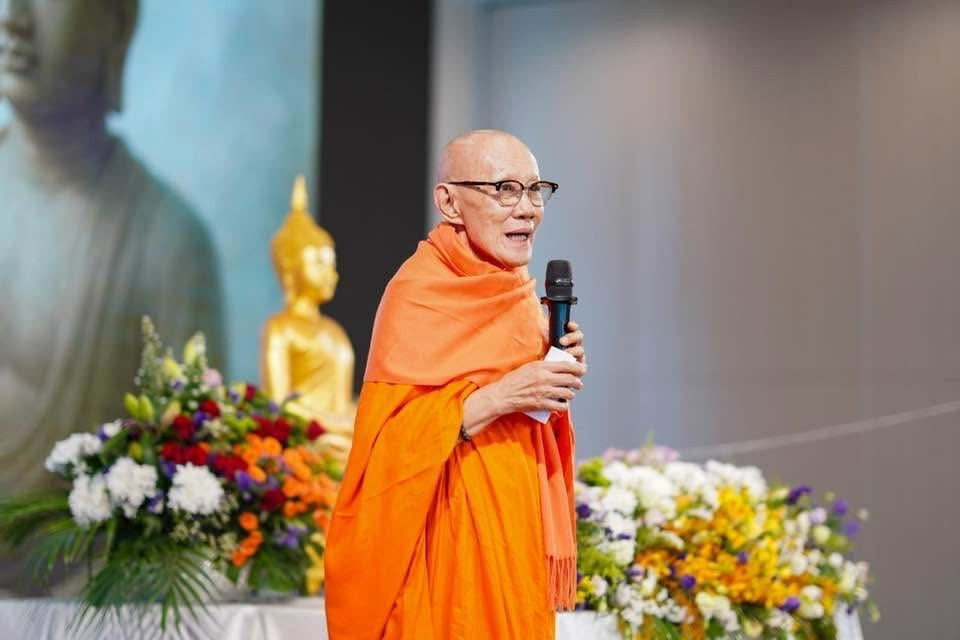
Venerable Seck Kong Hian
Archive · Vesak 2020

Vesak Message from Venerable Seck Kong Hian

An authentic Vesak 2020 recording published by BuddhistYouth Network has been identified for the archive. Its spoken content will be summarised only after the recording is verified.

View original Facebook recording ↗
Listen & Watch
Listen & Watch

Audio, chanting and video

A dedicated home for authentic temple recordings and approved Buddhist media as the collection grows.

Audio & Chanting

Organised for contemplative listening without turning the page into a crowded media feed.

Morning & Evening ChantingSuttasBlessingsMeditation AudioTemple Ceremonies

Video Library

Temple-approved recordings can be arranged by subject, with clear context rather than unrelated thumbnails.

Dhamma TalksChief AbbotMeditationCeremoniesBuddhist FestivalsTemple Heritage

Where recordings or texts are presented as teachings of Venerable Seck Kong Hian, only genuine temple material, transcripts or recordings approved by the temple should be published.